In a discussion with the Government Electronic Newspaper on the occasion of the launch of the NATION-BUILDING ENTERPRISES column, Mr. Nguyen Tam Tien, CEO of Trung Nam Construction Investment Joint Stock Company (Trungnam), emphasized a consistent message: Vietnamese enterprises need to “dare to think big, dare to do big,” dare to take on major tasks to build a self-reliant economy with sufficient competitiveness in the new context, and accompany the Government in achieving a growth target of 10% or higher.
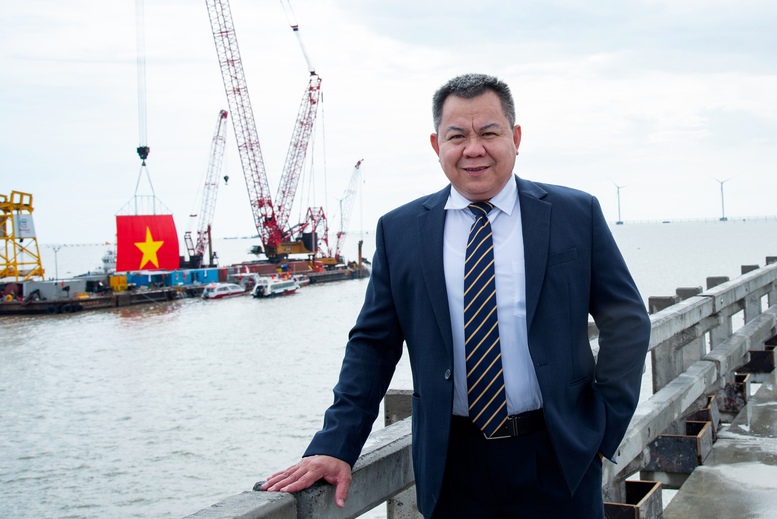
On the journey toward double-digit growth, the role of the business community—especially the private sector—is being placed at the center as an “endogenous engine” of the economy. Not only accompanying, enterprises also directly participate in the process of creating new growth space, contributing to realizing national development goals.
Reaching the global value chain from an internal-strength foundation
With a development strategy based on three pillars—energy, infrastructure, and real estate—Trungnam demonstrates a typical approach of a private enterprise in the new stage: developing under an integrated model, gradually completing the value chain and improving execution capacity.
Not only implementing large-scale projects domestically, the enterprise also aims at “localizing technology,” optimizing international solutions suitable for Vietnam’s conditions. This is the foundation for enterprises to gradually participate more deeply in the global value chain, rather than stopping at the role of processing or subcontracting.
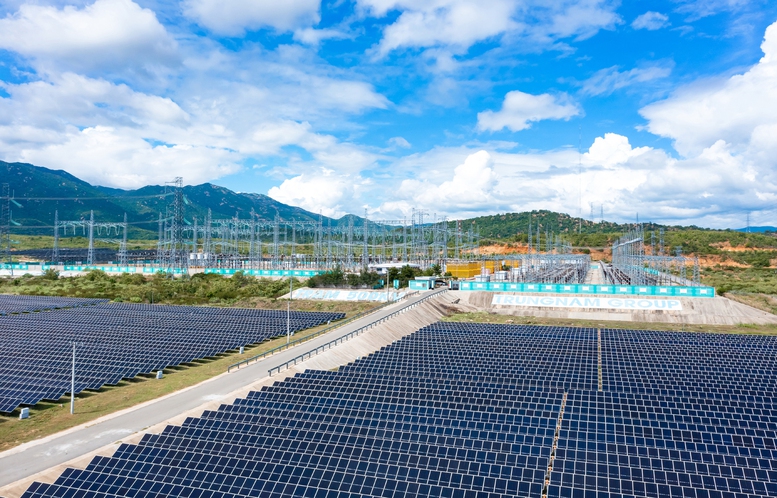
Trungnam currently participates at most project levels, from large-scale domestic projects to works of a regional nature. In the 2020–2021 period, the wind and solar power projects implemented by Trungnam were among the largest in Southeast Asia at the time of implementation.
In the energy segment, the 1,500 MW LNG gas-fired power project about to commence construction continues to mark a new step in the development of large-scale private power sources.
Meanwhile, in the company’s core capability of infrastructure, Trungnam has affirmed its position through participation in constructing complex, high-technical-standard works such as My Thuan 2 Bridge, Rach Mieu 2 Bridge, and the Nga Ba Hue interchange, with technical standards approaching those of international corporations. Works like these previously could only be designed and built by foreign companies and the State could spend a large amount of the budget; now we can be fully self-reliant.
Ensuring energy security – the foundation of high growth
In the Government’s high-growth orientation, with the goal of strongly expanding industrial production, upgrading high-quality agriculture, and attracting large-scale investment flows, ensuring stable and sufficient electricity supply at reasonable cost becomes the operational foundation of the entire economy. At the same time, in the context that Vietnam has made strong commitments at COP26 to the “net zero” target, the requirement is not only “enough electricity,” but also “clean electricity, sustainable electricity.”
According to Mr. Nguyen Tam Tien, in that flow, Trungnam positions itself as a private enterprise developed based on internal resources and proven capabilities, gradually moving toward the role of a sustainable energy infrastructure developer, contributing to ensuring energy security and promoting the energy transition in Vietnam.

In the next development stage, Trungnam is oriented to focus on developing large-scale energy, including wind power, solar power, and LNG gas power, integrating storage solutions and smart grids to improve system operation efficiency. At the same time, the group will strengthen investment in power transmission infrastructure to release capacity and ensure stable operation of the power system. Currently, Trungnam is one of the rare private enterprises participating in investing in and operating the 500/220 kV substation and transmission line system, thereby contributing to completing the national grid infrastructure.
Balancing rapid growth and sustainable development
As Prime Minister Le Minh Hung has emphasized, growth must be sustainable, not pursuing overheating growth, not trading off macro stability. Trungnam leadership affirmed full agreement with this viewpoint, considering that the appropriate direction is to value both speed and sustainability. An economy that wants long-term development needs to be built on a stable foundation.
To move toward a self-reliant economy, private enterprises need to shift from short-term thinking to long-term thinking, not only in investment strategy but also in the approach to resources and market position. The focus of this process lies in three core factors: human resources, technology, and cash flow management. At the same time, strengthening linkages and cooperation also becomes an important condition for enterprises to gradually participate more deeply in the global value chain.
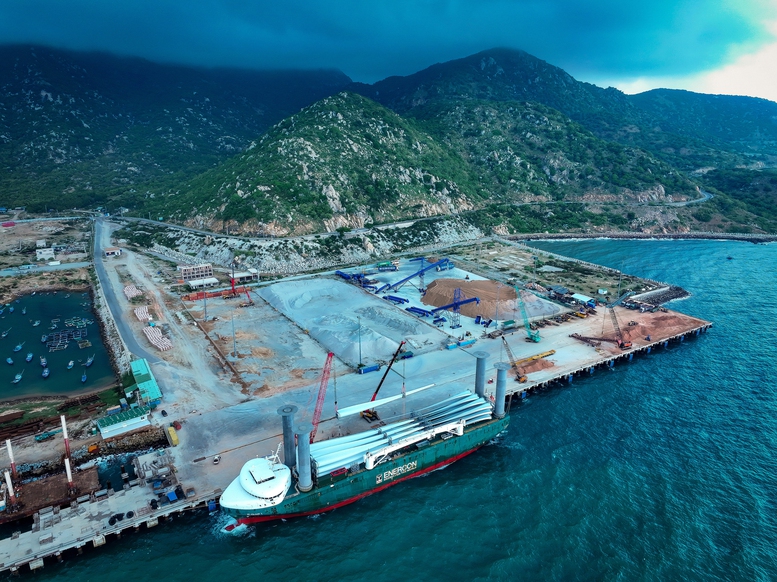
From a practical perspective, enterprises need to clearly identify who they are, where their position is in the value chain, and what they can do best. Competing directly with international corporations without a sufficiently strong foundation in technology, finance, and ecosystem is not feasible. Instead of spreading out, enterprises need to position their role correctly, focus on mastering a number of key stages with standards reaching international level, thereby gradually improving competitiveness.
On that basis, Trungnam orients development to be tied to long-term planning and national objectives, especially the requirements to reduce emissions and strengthen the internal strength of the economy. Projects need to closely follow national planning, prioritizing models capable of system integration—from source, grid to storage—in order to optimize operating efficiency and create sustainable long-term value.
Increasing the localization rate and linkage with localities is also an important pillar. This is reflected in strengthening the use of domestic resources in construction and operation, investing in developing local human resources, as well as accompanying the community in project areas. This approach not only helps enterprises strengthen internal strength, but also contributes to improving quality of life and creating spillover value for society.
Trungnam is proud to be the first domestic private enterprise to win the bid for the Ca Na LNG gas power project through international bidding in line with the orientation of Power Development Plan VIII. This is a notable milestone, because previously, in large-scale projects, Vietnamese enterprises mainly participated as subcontractors, while leading positions often belonged to foreign corporations.
The Ca Na LNG project also has symbolic meaning for the maturity of the domestic private sector when it is now capable of participating and taking a leading role in large-scale projects, under a transparent and competitive bidding mechanism. This is also a positive signal for the energy security problem, showing the increasingly clear role of domestic enterprises in key sectors of the economy.

Policy “support” toward double-digit growth
From the enterprise perspective, major policies on private economic development are becoming clearer, creating confidence for long-term investment. Removing institutional “bottlenecks,” especially for large-scale projects, is considered the decisive factor to unblock resources.
Trungnam leadership highly appreciated the strong involvement of the Government, ministries, sectors, and provincial leaders in recent policies. In particular, Resolution No. 212/NQ-CP issued at the right time and with the right focus not only removed obstacles for Trungnam’s flood control project in Ho Chi Minh City, but also contributed to addressing systemic institutional bottlenecks for large-scale, complex projects that had been stalled for a long time.
Previous estimates showed that flood-related losses in Ho Chi Minh City could reach more than VND 1,500 billion per year. When the project is operated synchronously and contributes to effectively controlling tidal flooding in key areas, the annual economic value saved could reach hundreds to over one thousand billion VND. These are benefits not directly recorded as revenue, but have practical meaning in maintaining stability for the lives of tens of thousands of households and bringing many economic benefits.
According to Trungnam, to realize the double-digit growth target as oriented by the Government, the core lies not only in determination, but in the ability to proactively create growth conditions—that is, there must be new projects, industries, and market spaces for enterprises, especially domestic enterprises, to participate.
In addition, a consistent industry development roadmap, stable policies, and sufficiently flexible special mechanisms are needed so that enterprises can expand scale and enhance capabilities. Particularly for the energy–infrastructure sector, where projects have long lifecycles and require large capital, the requirement for a stable and predictable policy environment becomes even more important.

A “support point” is also very necessary in human resource training—one of the pillars of development. From operational practice, Trungnam believes training should not only be viewed as an internal obligation of enterprises, but should be considered a form of investment for the nation.
Mr. Nguyen Tam Tien said that in practice, if an enterprise trains 100 people and retains 30 people, that is already considered a positive result; the remaining 70 people, even if they do not continue working, still carry skills and knowledge to contribute to the labor market and the economy in general. In other words, the benefits of training activities have clear social spillover effects.
Therefore, Trungnam proposes that agencies continue to consider incentive mechanisms such as tax exemptions or reductions for training expenses; and at the same time build a policy framework to support cooperation between enterprises and educational institutions to improve training quality and practicality.
An appropriately encouraged training ecosystem will not only help enterprises proactively secure human resources, but also contribute to improving national labor quality—an underlying factor for sustainable long-term growth.
It can be said that the above “policy support points” will help enterprises feel secure in strategic planning and implementing long-term investment. Conversely, if the policy environment lacks consistency and risks increase, enterprises will narrow plans and delay investment decisions, thereby reducing growth momentum.
In the new development stage, enterprises are not only policy beneficiaries, but are becoming actors together with the Government in creating growth. When the three factors of capital, institutions, and market confidence converge, the business sector will have sufficient motivation to make large investments, take ownership of strategic projects, and gradually elevate national position. In other words, the double-digit growth target is not only the Government’s problem, but the result of accompaniment and synergy between the State and enterprises—where each enterprise truly becomes a “nation-building cell” in the modern economy.
Source: Quang Hưng (baochinhphu.vn)