Expected to enter operation this November, the VND 10,000 billion flood control project in HCMC will coincide with the city's highest annual tidal peak. The project helps reduce flooding across 20 wards and communes over a total area of 570km².
 |
|
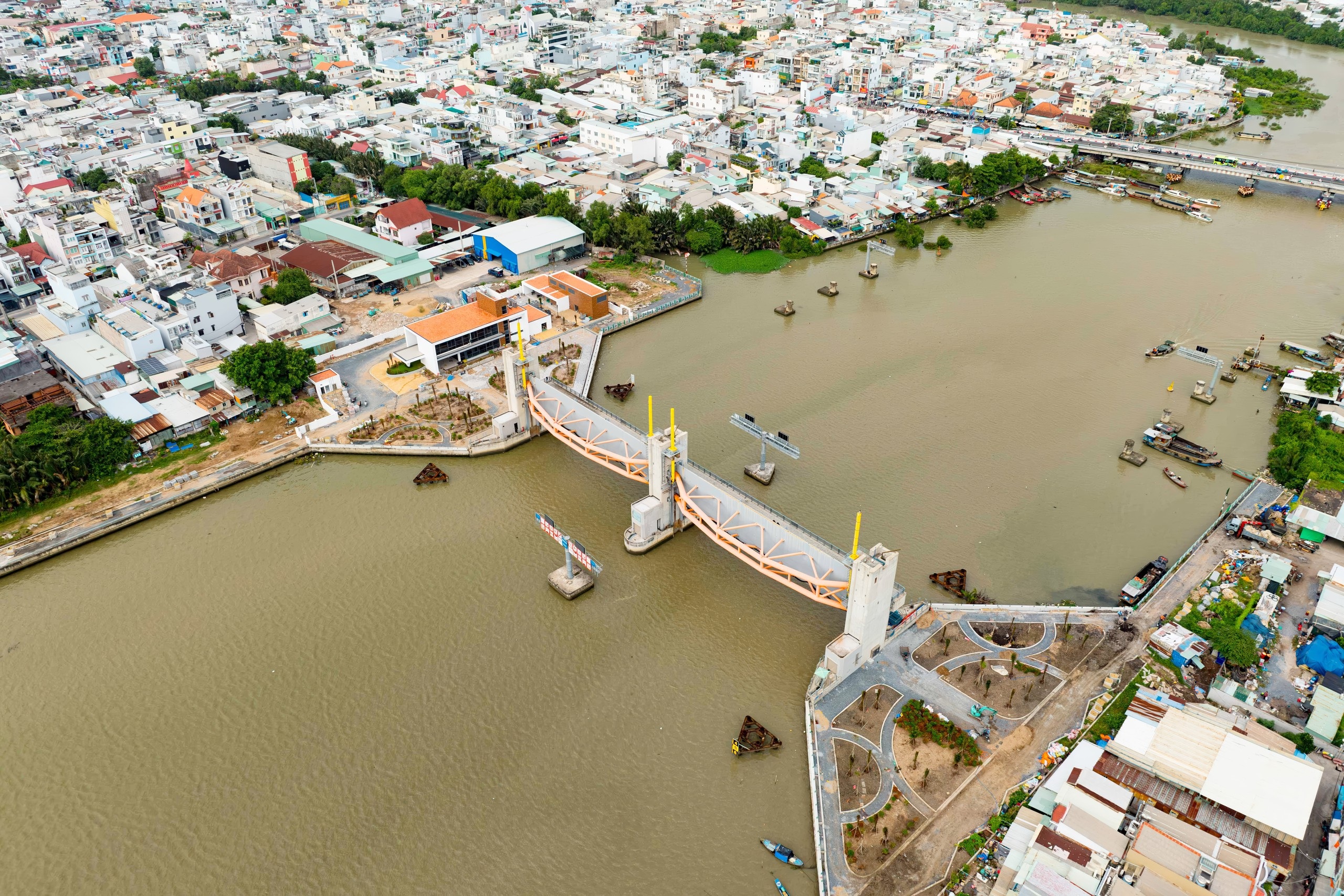
Phu Xuan sluice gate item under the VND 10,000 billion flood control project
|
The VND 10,000 billion flood control project, officially titled the project to solve tidal flooding in the HCMC area taking into consideration climate change factors - Phase 1.
Protected Area Up To 570km²
According to Mr. Nguyen Tam Thinh, Chairman of Trungnam Group, the VND 10,000 billion flood control project comprises 8 tidal control sluices: Ben Nghe, Tan Thuan, Phu Xuan, Muong Chuoi, Cay Kho, Phu Dinh, Cau Kinh, and Ba Buom; along with approximately 6 km of dykes, protective embankments, and 41 small sluices along key vulnerable locations.
When operational, the project will synchronize 19 monitoring points, combined with an automated SCADA control and continuous monitoring system. The project helps control tidal flooding for an area of approximately 570km², benefiting around 6.5 million residents, primarily in central and southern HCMC along the right bank of the Saigon River.
Under the updated administrative boundaries following restructuring, the project's beneficial scope covers 20 wards and communes, including Saigon, Tan Dinh, Ben Thanh, Cau Ong Lanh, Xom Chieu, Khanh Hoi, Vinh Hoi, Tan Thuan, Phu Thuan, Tan My, Tan Hung, Chanh Hung, Phu Dinh, Binh Dong wards; alongside Nha Be, Hiep Phuoc, Tan Nhut, Binh Chanh, Hung Long, and Binh Hung communes. These represent areas formerly belonging to Districts 1, 4, 7, 8, and Nha Be and Binh Chanh districts.
"In terms of efficiency, we must recognize that HCMC faces the reality of urban land subsidence year over year, while tide levels and storm surges grow increasingly complex. This heightens flood risks in low-lying areas, particularly existing residential communities and urban infrastructure systems.
In this context, investing in a tidal flood control barrier system is an essential infrastructure solution to proactively control and minimize the impact of high tides on the city," Mr. Thinh stated.
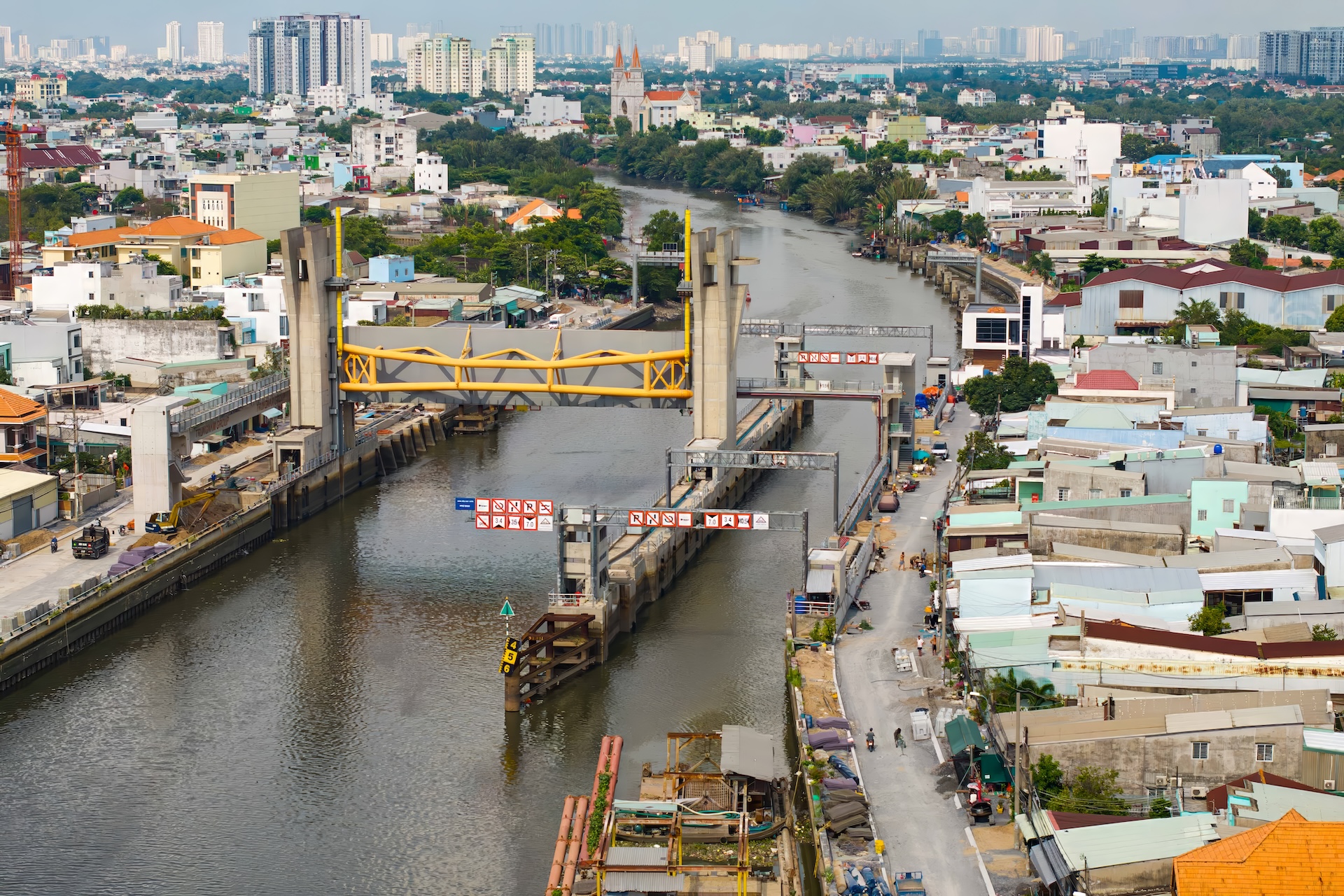
According to the investor, the project's most vital role is establishing a control structure system preventing high tides from major rivers from penetrating inner-city canals and streams. When operating synchronously, the control sluices and dyke lines will restrict rising tidal waters from flooding residential areas, roads, and infrastructure works.
 |
|
The VND 10,000 billion flood control project in HCMC is mobilizing maximum workers and machinery for urgent construction to operate in November
|
Beyond tidal control, the system supports regulating water levels in canals, creating favorable conditions to receive and drain rainwater through the existing urban drainage network.
However, it must be emphasized that completing the project does not mean HCMC will completely eliminate all flooding, as the project focuses specifically on resolving tidal flooding. For heavy downpours exceeding current infrastructure capacity, effective urban drainage infrastructure remains necessary to carry water to basins where the project can assist in pumping stormwater out to major rivers.
It can be affirmed that the VND 10,000 billion flood control project serves as a "steel shield" helping HCMC proactively control tidal surges, minimize water rise impacts, safeguard urban infrastructure against natural variations over the long term, and stabilize citizens' lives.
Mr. Nguyen Tam Thinh, Chairman of Trungnam Group
 |
|
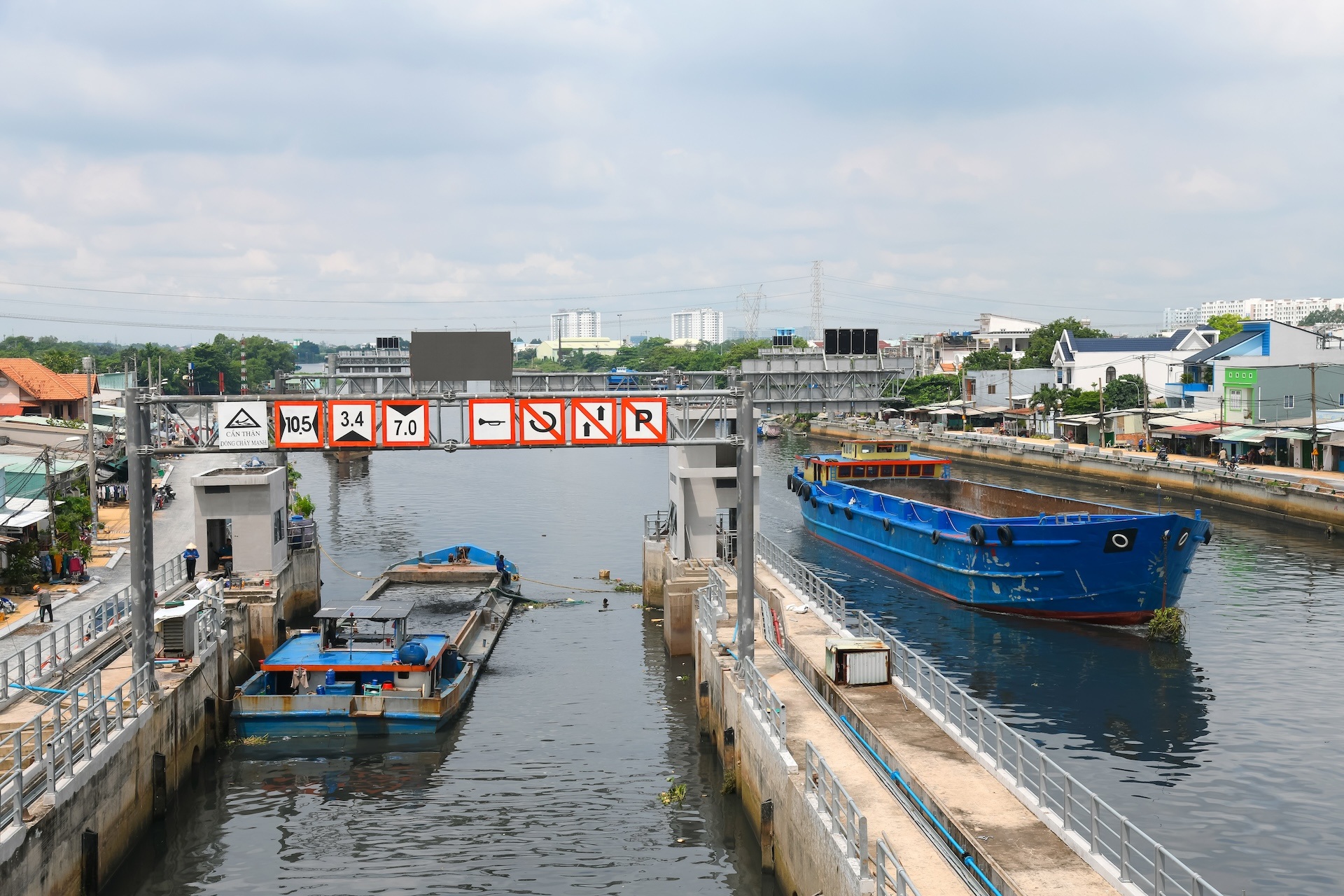
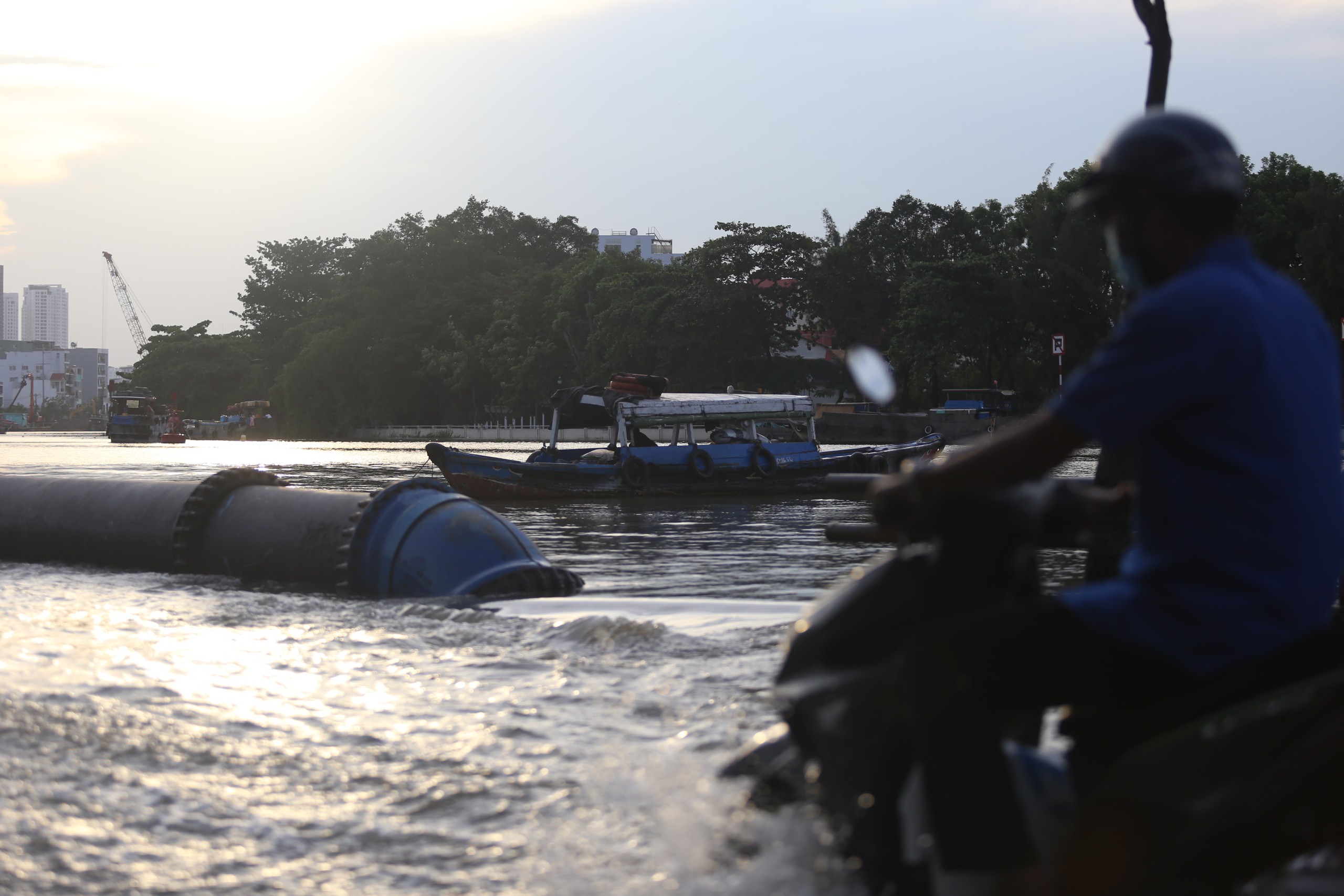
Vessels will navigate normally when this project operates
|
How Does the VND 10,000 Billion Flood Control Project Operate?
Regarding operational mechanics, Mr. Nguyen Van Bao, Deputy Director of Trung Nam An Trieu, explained that basically, the flood control project can be envisioned as a large-scale water regulation gate system designed to block high tides between major outer rivers and inner-city canals.
Operating principles are based on water level fluctuations, weather conditions, and actual hydrological status. Under normal conditions when water levels are suitable, sluice gates remain open to maintain flow between major rivers and inner-city canal networks.
"When high tides surge, the system closes sluice gates following operating procedures to block river water and create an enclosed internal zone, thereby restricting rising canal levels from flooding residential areas and roads.
Particularly when heavy rain coincides with high tides, besides blocking outer river tides, pumping stations at Ben Nghe, Tan Thuan, and Phu Dinh will be mobilized according to operational parameters to pump internal water out to major rivers, lowering canal water levels and facilitating rainwater drainage.
When tides recede and outer water levels drop appropriately, sluice gates reopen, allowing internal water to discharge naturally," Mr. Bao illustrated.
The entire process is supported by an automated SCADA monitoring and control system, tracking operational parameters and regulating project activities synchronously and flexibly.
However, it should also be highlighted that the project does not directly collect all street rainwater, but primarily blocks incoming tidal water and creates better conditions for urban drainage systems to function.
"We hope that upon full completion, commercial commissioning, and synchronized operation, the project will fulfill its role in mitigating tidal flooding, improving drainage conditions, and raising quality of life for HCMC residents," Mr. Bao expressed.
How do vessels navigate when the project operates?
According to Mr. Nguyen Van Bao, Deputy Director of Trung Nam An Trieu, right from the design phase, the project was engineered to ensure dual objectives: controlling tidal surges and maintaining waterway traffic along regional rivers and canals.
For the 8 major tidal control sluices, when main gates are fully opened and operational safety conditions are met, vessels navigate normally along permitted channels.
Specifically, at 4 sluices including Tan Thuan, Muong Chuoi, Cay Kho, and Phu Dinh, lock chambers (âu thuyền) were added to the design. This represents a crucial item supporting waterway vessel passage while main sluice gates remain closed during high tides.
For visualization, a lock chamber functions like an intermediate room with gates on both ends. When vessels need to pass, they are guided into the lock chamber, and the rear gate closes. The system adjusts internal lock water levels to equalize with the opposite side. Once safe conditions are verified, the remaining gate opens for vessels to continue their journey.
This process follows technical procedures under operator control to ensure safety for both vessels and structures.
Thus, all waterway traffic activities remain fully guaranteed throughout system operation.
 |
|
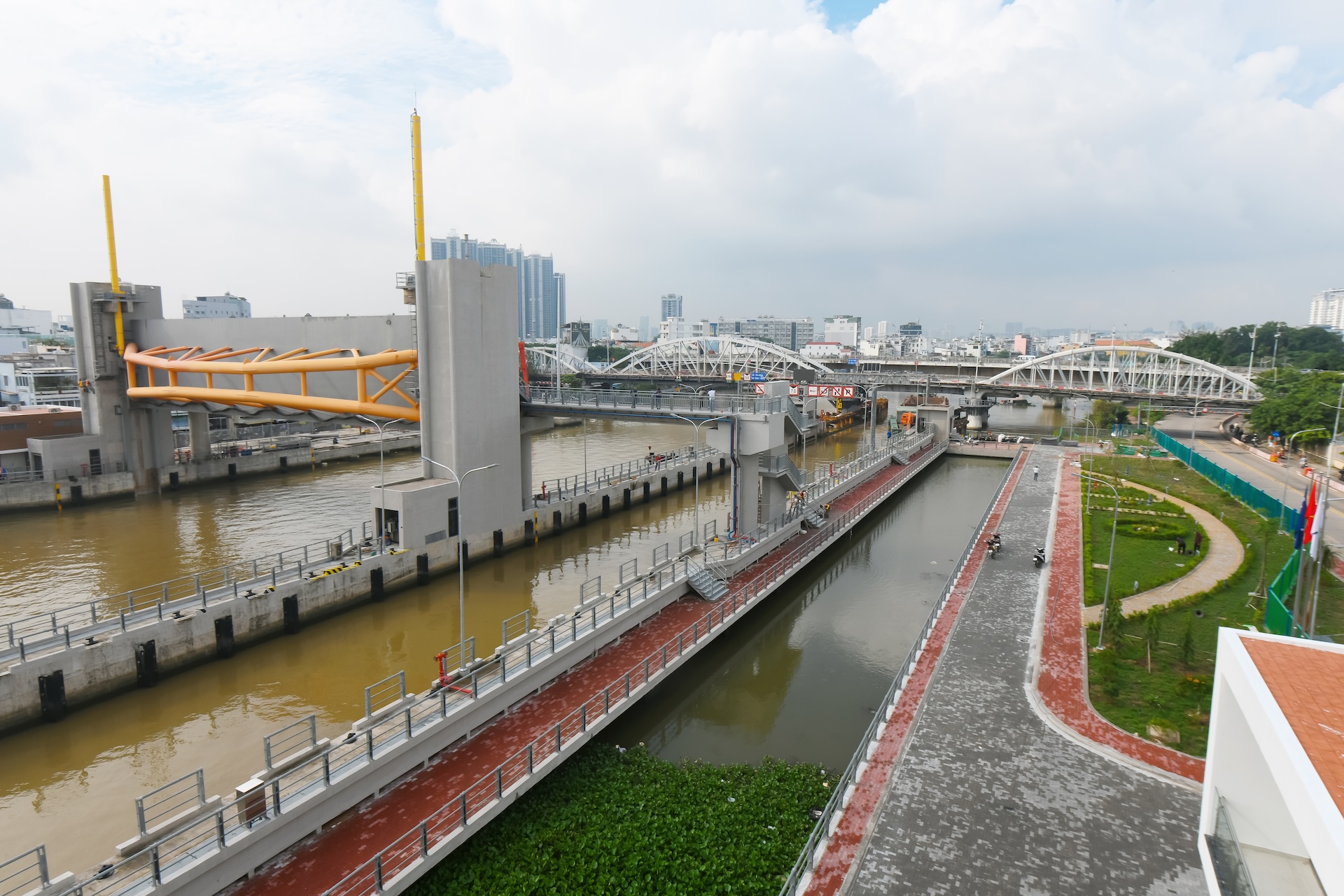
In November 2026, trial operations will be conducted for Muong Chuoi and Phu Dinh sluices along with the central management building before formal operation
|
 |
|
This project is expected to help reduce tidal flooding in southern HCMC
|
Source: Tuoi Tre Newspaper