After a prolonged difficult period since 2022, Trung Nam Group has ended its losses and gradually recovered. Group leadership confirmed that all bad debts will be resolved in 2026, laying the foundation for acceleration in the 2026–2030 period.
Trung Nam is known as one of Vietnam’s large private enterprises, operating in multiple sectors, with a strong presence in energy, infrastructure, and real estate. The group’s core strength lies in its investment and construction capacity for large-scale projects, having made a strong mark over many years with a series of hydropower, solar power, wind power, and transport infrastructure projects.
However, the capital-intensive investment model, long payback cycles, and adverse market fluctuations have put increasing financial pressure on Trung Nam. From mid-2022, the group’s growth momentum began to slow, marking a period of “losing steam” after many years of rapid expansion.
 |
|
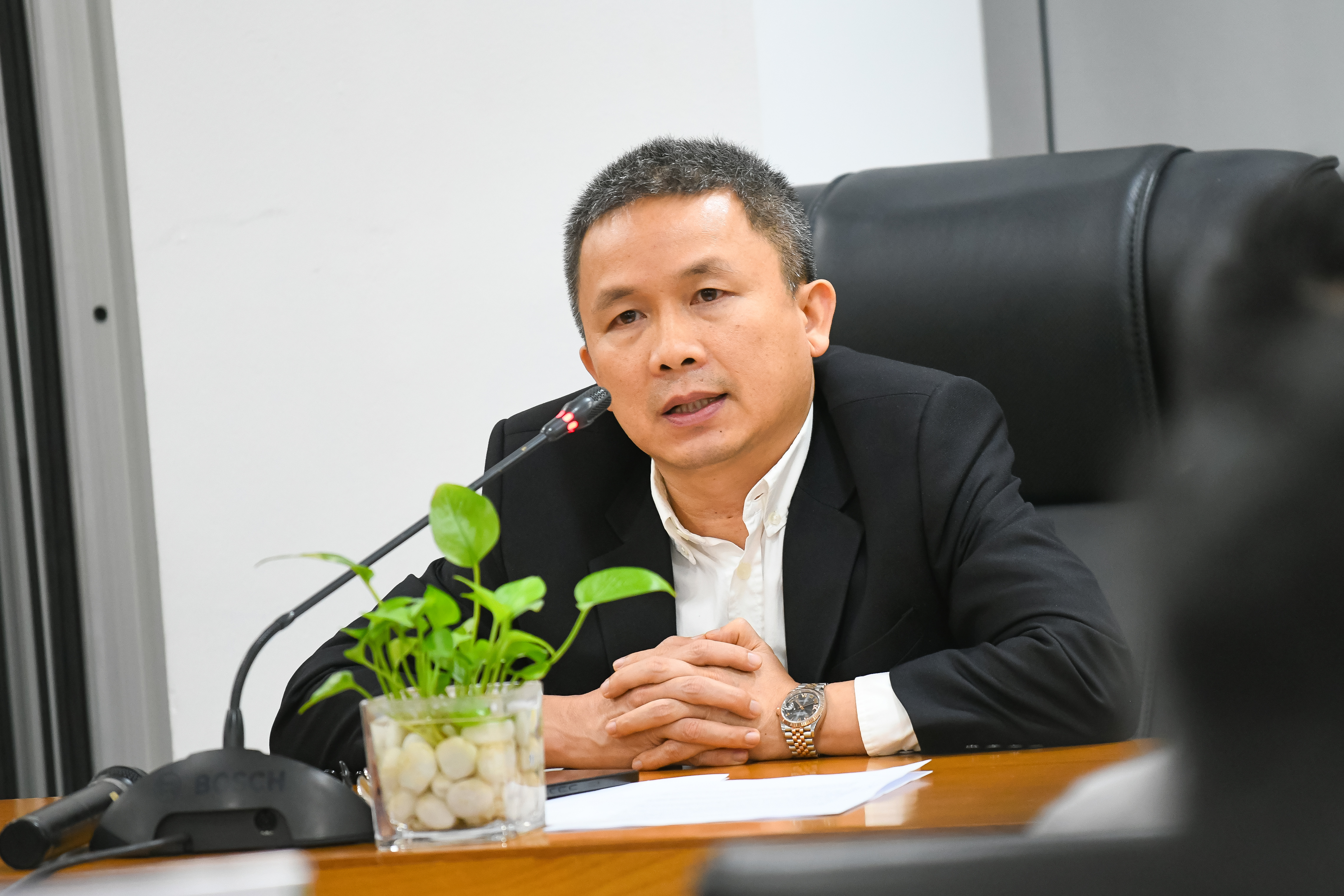
Mr. Le Nhu Phuoc An, Standing Deputy General Director of Trung Nam Group.
|
Overcoming a “double shock,” making a remarkable turnaround
Trung Nam Group entered a difficult period from mid-2022, when unfavorable signals simultaneously emerged from the market, business environment, and especially large-scale projects facing legal obstacles. Pressure intensified during 2023–2024, becoming the most challenging period as the group was forced to cut thousands of jobs while debt burdens continued to increase.
Mr. Le Nhu Phuoc An, Standing Deputy General Director of Trung Nam Group, said that in 2023 the group recorded a loss of up to VND 2,800 billion, which decreased to over VND 280 billion in 2024.
The 2023 loss partly resulted from declining revenue and partly from provisions for investment impairment, especially at large power plants. At the Thuan Nam power project, due to inspection issues related to contract pricing, the group only received about one-third of revenue (for example, under a contract price of 10, only 3 was received), leading to the requirement for very large provisioning.
By 2025, as legal issues and risks were gradually resolved, the group reversed provisions, eliminating negative impacts. Thanks to strategic restructuring activities and improvements in market policy mechanisms, the group ended its operating losses and began to generate profit.
Specifically, cumulative revenue by December 2025 reached VND 13,686 billion. Of this, total revenue from power plants was approximately VND 6,000 billion, up more than 10% compared to 2024, continuing to be the group’s stable pillar.
At the beginning of 2026, Trung Nam leadership affirmed that the group had passed the “bottom of the U-shaped curve” and returned to the level achieved in 2021 in terms of scale, revenue, and workforce.
 |
|
Energy will be Trung Nam’s core pillar in the coming period.
|
“Liquidity risk, not solvency risk”
Group leaders also stated that in 2025, Trung Nam’s total assets were estimated at around VND 95,000 billion. Total borrowings were about VND 48,300 billion, including VND 29,800 billion in bank loans and VND 18,500 billion in bonds raised for investment projects. Of the bond debt, more than VND 1,500 billion was owed to individuals, with the remainder owed to institutions and banks.
Trung Nam’s debt-to-equity ratio is currently at 2.9 times, which Mr. An considers an average level for infrastructure investment projects with large capital requirements and long payback periods.
Notably, the group’s liquidity improved significantly in 2025 as bond packages at power plants were all paid in principal and interest on schedule. At the same time, Trung Nam achieved many positive results in negotiations with bondholders, receiving strong consensus and support in restructuring cash flows.
Specifically, at the Thuan Nam power project, the main bondholder, MB Bank (holding 82% of bond value), completed restructuring in June 2025, with a payment schedule adjusted to actual cash flows and EVN payment progress. Similarly, the bond package of the Dak Lak power plant was approved for restructuring by Vietcombank (holding 75% of bond value) in December 2025, helping to reduce financial pressure in the early years of operation.
At the same time, Trung Nam is implementing a large-scale financial restructuring with the participation and support of many credit institutions. The total restructuring value at power plants is estimated at over VND 10,000 billion, of which VPBank proposed the largest restructuring value, over VND 5,000 billion. Some projects have completed restructuring, while the remaining projects are being implemented according to the roadmap.
According to Mr. An, the group is conducting financial restructuring to address pressure from bank loans and bonds.
“The recent difficulties stemmed from both external factors (legal issues, market conditions) and internal factors due to an imbalance between short-term and long-term capital structure, leading to liquidity pressure. However, the group emphasizes that this is liquidity risk (cash flow) rather than solvency risk. Asset values, especially power plants, remain stable or are increasing, ensuring sufficient debt recovery capacity,” Mr. An said.
Trung Nam leadership affirmed that in the first half of 2026, the group expects to resolve all bad debts of the parent company and its subsidiaries; to date, more than 80% has already been resolved.
 |
|
With many years of experience in infrastructure development, Trung Nam affirms that it has sufficient capability and financial capacity to deeply participate in the development of the North–South high-speed railway, the North–South expressway, and metro lines in the coming time.
|
Preparing for a new investment cycle
On the foundation of financial recovery, Trung Nam is preparing resources for a new development phase. In the 2026–2030 period, the group plans to invest approximately VND 165,000 billion in renewable energy under the revised Power Development Plan VIII, along with the Ca Na LNG power project with a total investment of about VND 57,000 billion.
In addition to its own capital, Trung Nam is working with domestic and foreign credit institutions and cooperating with many international partners on consultancy, EPC, and operations. Payments from EVN have improved, while obstacles related to power purchase agreement mechanisms are being directed by the Government to be resolved.
In 2026, the group plans to strongly restart wind, solar, and LNG energy projects, while continuing to participate in key infrastructure projects, in line with the orientation of increasing public investment. With a chain of projects spread across many localities, Trung Nam expects the 2026–2030 period to be a time of renewed acceleration on the foundation strengthened after restructuring.
Currently, Trung Nam has researched, surveyed, and conducted wind and solar resource measurements at about 30 wind and solar power projects. In addition to traditional renewable energy projects, the group is also interested in energy storage batteries, hydrogen, and ammonia, with the expectation of becoming one of the pioneering enterprises in these fields in Vietnam. Total planned investment is estimated at about USD 6 billion by 2030.
At the same time, Trung Nam expressed its desire to participate in researching and investing in several projects included in planning, including ultra-high-voltage transmission lines and pumped-storage power plants, in order to enhance integration capacity and efficient operation of renewable energy sources.
Source: Bao Xay Dung Newspaper