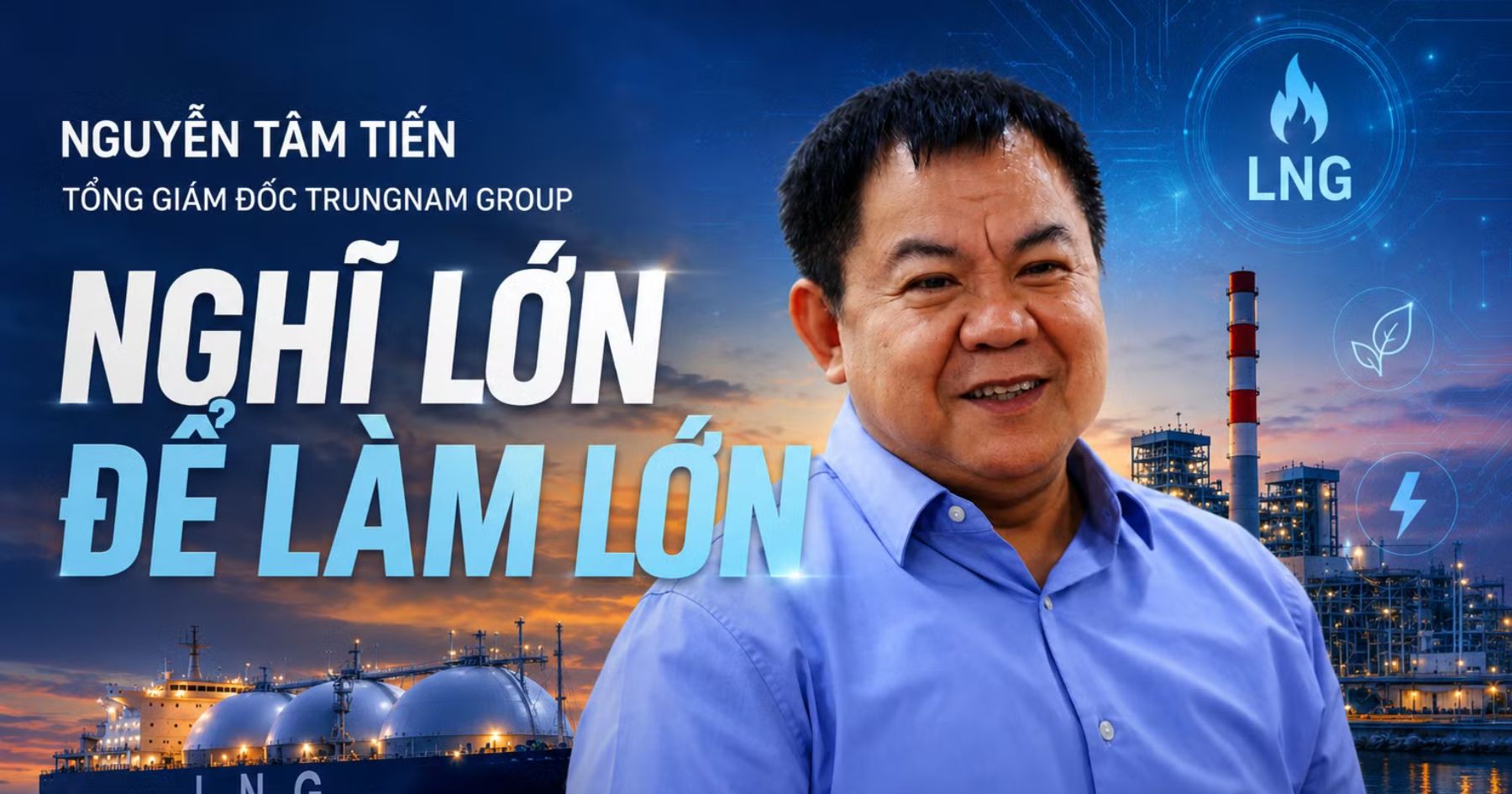
On April 10, 2026, in Ca Na, Khanh Hoa Province, for the first time in the implementation of Power Development Plan VIII, a liquefied natural gas (LNG) power project was awarded through a competitive international bidding mechanism — and the winning entity was a Vietnamese private enterprise.
The Trungnam-Sideros River consortium signed an investment contract for the Ca Na LNG Thermal Power Plant, valued at VND 57,385 billion, opening the door to an industrial-port-energy complex of regional scale.
More notably, this comes as General Secretary and President To Lam has emphasized: "low growth is unacceptable," and has identified the private economy as needing to become the "leading force" of the economy...
A Nhan Dan Newspaper reporter had a conversation with Mr. Nguyen Tam Tien, CEO of Trungnam Group, who has spent more than three decades turning projects once thought beyond reach into reality.
Philosophy and Resolve
Reporter: Over more than 20 years, from your first construction company to becoming an investor in a VND 57,000-billion LNG project — what was the real decision to "go big," and what convinced you that Trungnam was ready to cross that threshold?
Mr. Nguyen Tam Tien: I don't think Trungnam grew from a single decision. We grew through every construction site, every difficult assignment we took on, and every time we had to prove that a Vietnamese enterprise could do things once thought possible only for foreign companies or state-owned entities.
Trungnam's real decision to "go big" wasn't when we entered LNG investment. It began when we chose infrastructure and energy as our long-term path. These are fields with no quick profits, no easy capital turnover, and no room for half-measures... To enter them, an enterprise needs ambition, but more importantly, it needs discipline, technical expertise, risk management, and steadfastness.
Starting from the Dong Nai 2 Hydropower Plant, through solar and wind power projects, to 500kV transmission lines and substations, we built our capabilities step by step. And Ca Na LNG is a new rung on that ladder, not a leap into the void... It is the result of more than 20 years of building infrastructure, developing energy, and learning how to organize large-scale projects.
I often tell my colleagues and staff: an enterprise cannot grow through declarations. An enterprise only grows when a project is completed, put into operation, generates real value, and stands firm against the test of time.
Reporter: General Secretary and President To Lam has emphasized that the private economy must become the "leading force." In your view, what should private enterprises propose or recommend?
Mr. Nguyen Tam Tien: What enterprises need most is not favoritism. We need a development environment that is stable, transparent, open, and predictable.
For ordinary commercial projects, businesses can adjust quickly, but for energy, seaports, industrial parks, or transmission infrastructure, an investment decision made today can extend 20 to 30 years into the future. Cash flow, technology, borrowed capital, sales contracts, environmental responsibilities, obligations to localities — all of it must be calculated over the long haul.
That's why the most important thing is that the policy "rail track" must be clear enough. When the track is stable, an enterprise will know how to steer its own train in the right direction, at the right speed, and with the right responsibility.
I believe that the state creating the conditions and enterprises executing are not two separate roles. The state opens up development space and ensures order and national interest. Enterprises must invest with real capital, real capability, real governance, and bear real responsibility. When both sides look in the same direction, the private sector can truly become a genuine force for development.
Reporter: 2022-2025 was a period of serious financial pressure for Trungnam. What determined survival, and what risk management lessons would you like to share candidly in this conversation?
Mr. Nguyen Tam Tien: I look back on that period with gratitude and clarity. Gratitude, because Trungnam had a team that had stood together for many years, understood the company, understood the construction sites, and understood that there are times an enterprise must pull back to protect its core. Clarity, because the crisis showed us very clearly the weaknesses we could no longer avoid.
I think the first lesson is cash flow. For an infrastructure enterprise, cash flow is like oxygen. Assets can be enormous, projects can be beautiful, but if cash flow gets blocked, the enterprise's "health" deteriorates very quickly. So growth must always go hand in hand with cash flow resilience.
The second lesson is legal foundations. An investment opportunity may look very attractive, but if the legal groundwork isn't solid enough, the downstream costs will be enormous. After that period, I became even more convinced that an enterprise wanting to go the distance must build everything on a tighter legal foundation and manage risk better from the outset.
The third lesson is honesty with oneself. An enterprise must not lull itself to sleep with pretty numbers. You must know when you're healthy, when you're stretched thin, when to stop, and when to restructure. A crisis is never pleasant, but if you get through it, it helps the enterprise mature a great deal.
Expectations for the Ca Na Complex
Reporter: April 2026 marks a major milestone for Trungnam Group and Vietnam's energy sector, as the first LNG project was awarded through international bidding under Power Development Plan VIII. How do you feel about the weight of that responsibility?
Mr. Nguyen Tam Tien: I see this not just as a Trungnam project but as part of the broader task of national energy security. Renewable energy is very important, but a modern power system cannot rely on sun and wind alone. An economy aiming for high growth needs a stable power source capable of running as baseload, and especially capable of balancing the system.
At this stage, LNG is a necessary piece of the puzzle to support the energy transition, especially as Vietnam still needs to ensure sufficient electricity for production, industry, urbanization, and new sectors such as data centers and high-tech industries.
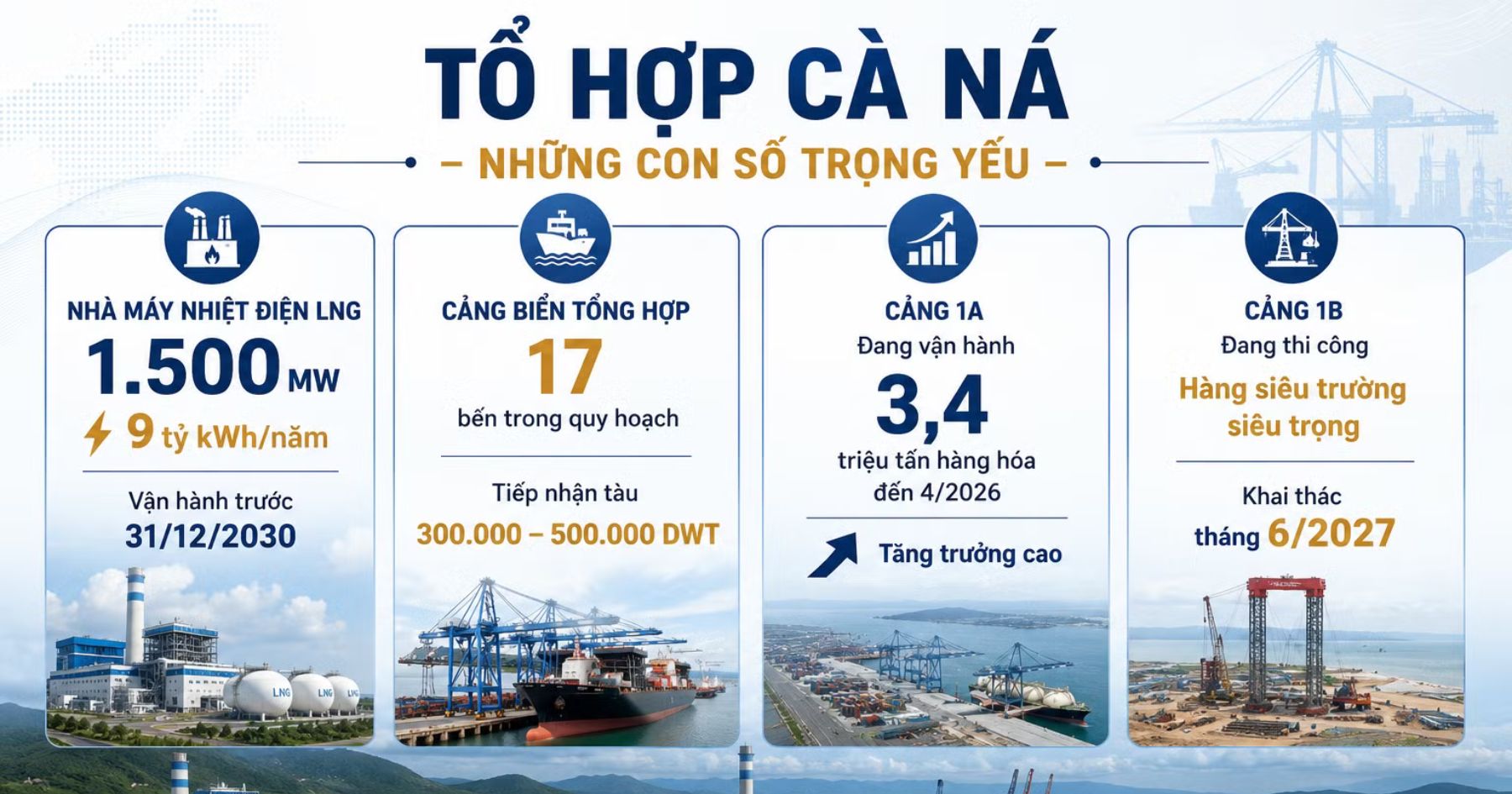
AI-generated illustrative image.
For Trungnam, Ca Na LNG does not stand alone. It sits within a larger complex that includes a seaport, LNG storage, an industrial park, logistics, renewable energy, and future development directions such as storage, hydrogen, and offshore wind power. We don't just want to build a power plant — we want to help build an infrastructure foundation strong enough to draw industry to Ca Na...
The responsibility here is clearly heavy, but if a private enterprise wants to be trusted with major undertakings, it must accept that weight.
Reporter: Personally, how do you feel about the responsibility of leading the implementation of the largest project in Trungnam's history?
Mr. Nguyen Tam Tien: In my view, a leader must first preserve the spirit of the organization. In large projects, the pressure isn't just about capital or technology — it's also about the team's confidence. When the construction site hits difficulties, when the schedule tightens, when cash flow is under pressure, when partners raise questions, a leader can't just offer generic words of encouragement. You have to understand the work, dare to take responsibility, dare to make decisions, and dare to stand at the helm.
I always remind myself that the way you do one thing reflects the way you do everything. Since we chose to undertake Ca Na LNG, we must do it with the best spirit, the highest standards, and the greatest responsibility.
I also want to emphasize that what I want to preserve most is not my personal image, but Trungnam's core values: "Dedication, steadfastness, and resolve." An enterprise can change its strategy, change its business model, change its capital structure — but it must never lose the core that made it who it is.
Reporter: The Ca Na General Port is planned to accommodate super-heavy, oversized vessels and become a central LNG hub for both the Central and Southern regions. What is your vision for Ca Na's position within the national logistics ecosystem?
Mr. Nguyen Tam Tien: Ca Na has a very special advantage: its coastal location, deep water with little sedimentation, available space for industrial development behind it, and its position within a region rich in energy potential. But natural advantages are only a starting condition. To turn advantage into value, you need infrastructure, you need cargo volume, you need connectivity, you need industrial investors, and you need a sufficiently long-term vision.
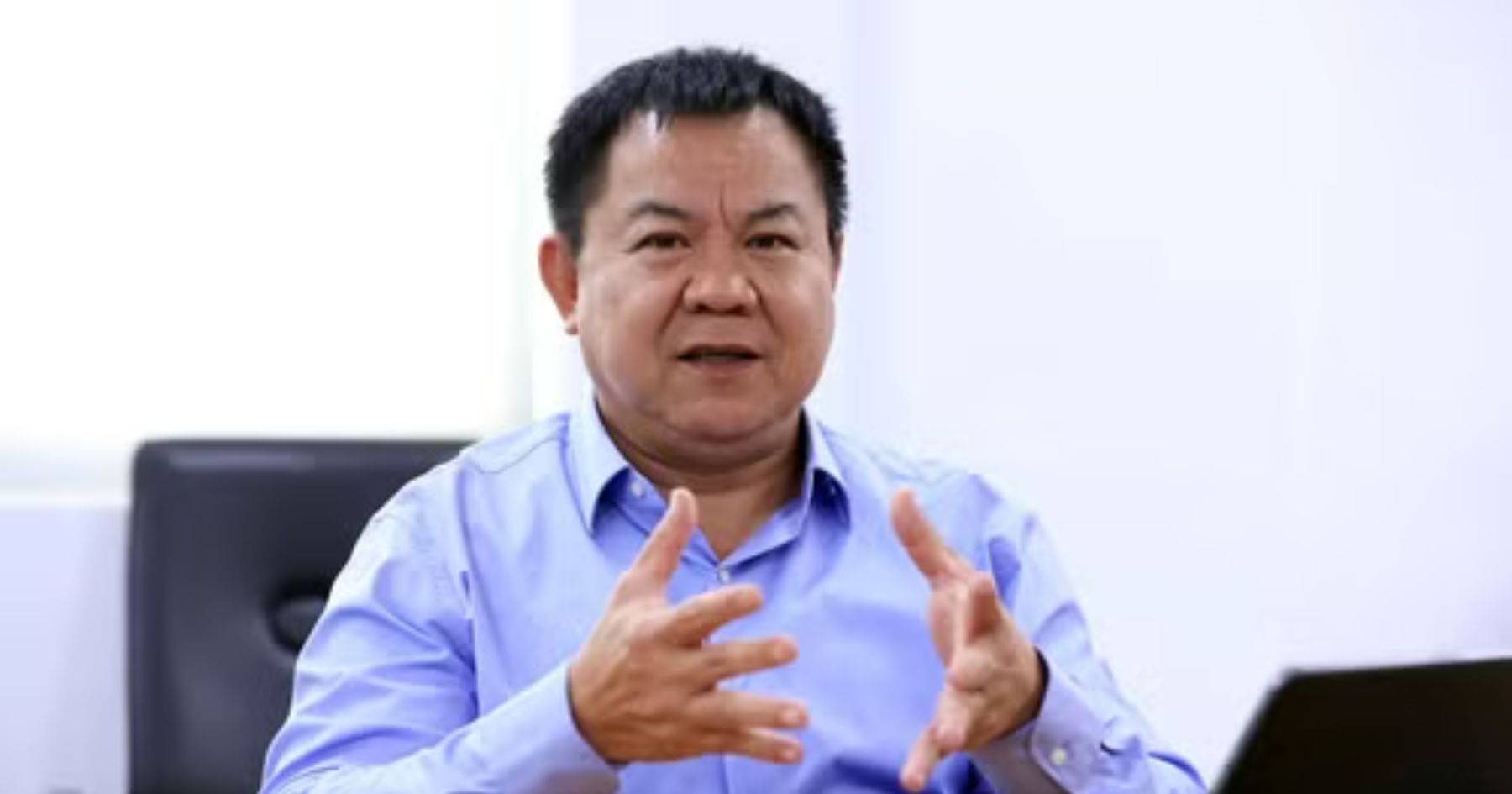 |
"I don't want to say Ca Na is just a port. Ca Na must be seen as an industrial-energy-logistics gateway. When the port connects with LNG, industrial parks, renewable energy, oversized and super-heavy cargo, wind turbine equipment, materials, and international logistics, its value becomes something entirely different from a standalone port."
— Mr. Nguyen Tam Tien |
I don't want to say Ca Na is just a port. Ca Na must be seen as an industrial-energy-logistics gateway. When the port connects with LNG, industrial parks, renewable energy, oversized and super-heavy cargo, wind turbine equipment, materials, and international logistics, its value becomes something entirely different from a standalone port.
If done well, Ca Na can become a new transshipment point for the South Central region, helping to share the load of the national logistics system and opening up further development space for the energy industry. That is what Trungnam is pursuing: not just building a port, but building connectivity capability.
Reporter: Trungnam is building an integrated complex: international port – LNG storage – thermal power plant – green industrial park. Is this an entirely new "industrial-energy ecosystem" model? What is its competitive advantage compared to standalone projects?
Mr. Nguyen Tam Tien: The greatest advantage is synergy. If each component were built separately, costs would be very high and effectiveness would be fragmented. A seaport needs cargo. A power plant needs fuel, grid connection, and load demand. An industrial park needs stable power, good logistics, and synchronized infrastructure. When these components are placed within the same ecosystem, they support one another and reduce overall costs.
I believe large-scale infrastructure must be designed as a system. Building small may be easier, but it doesn't create long-term competitiveness. Building big is harder, but if organized correctly, it generates far greater spillover value.
The positioning of the Ca Na Industrial Park is not that of a traditional labor-intensive industrial zone. Instead, we are targeting energy industries, equipment manufacturing, logistics, and production serving global supply chains — sectors that need stable power, strong port infrastructure, and increasingly stringent green energy requirements.
As the world talks about green supply chains, green data, and green industry, an industrial park with access to renewable power, seaports, LNG, and synchronized logistics infrastructure will hold a distinct advantage.
National Responsibility and Vision for the Future
Reporter: With nearly 1.6 GW already connected to the grid and Ca Na LNG about to launch, Trungnam seems to be "carrying" part of the nation's energy security on its shoulders. At what point did you recognize that responsibility, and how did it change the way you make decisions?
Mr. Nguyen Tam Tien: I would use the word "contribute" rather than "carry." Energy security is a national challenge — one for the state, the power sector, and many economic actors. Trungnam is just one of the enterprises that wants to contribute to that effort.
But once we commit to participating, we must do so with seriousness and caution. Electricity is not like many other products. It is directly tied to production, daily life, growth, economic security, and national competitiveness. A delayed power project doesn't just affect the enterprise — it affects the entire system.
That's why, whenever Trungnam works on solar power, wind power, transmission, or LNG, we always look beyond the scope of a single project. The question isn't just what this project brings to the company, but what it contributes to the power system, to the locality, to industry, and to the country's long-term development goals.
Reporter: After all the ups and downs — crises, then records — what is the costly lesson you don't want the younger generation of entrepreneurs to have to learn the hard way?
Mr. Nguyen Tam Tien: I think there are three things.
First, don't mistake fast growth for sustainable development. Fast growth can feel very exhilarating, but if cash flow, legal foundations, and governance can't keep pace, the enterprise will pay the price.
Second, don't treat legal work as something to handle later. For large projects, legal groundwork is the foundation. If the foundation isn't solid enough, the taller the building, the greater the risk.
Trungnam Group's wind power project and Ca Na Port project
Third, don't lose your professional peace of mind. I still tell my colleagues and staff: whatever you do, at the end of the day you must be able to sleep soundly with what you've done. Sleeping soundly doesn't mean having no pressure. It means knowing you acted according to principle, according to the law, according to your responsibilities, and without betraying your core values.
Young entrepreneurs can be very talented, very fast, very creative — but going the distance requires one more thing: integrity in risk management.
Reporter: If you had a message for the Government, for Vietnamese private enterprises, and for the younger generation of entrepreneurs, as the country enters a new era of development, what would you say?
Mr. Nguyen Tam Tien: I want to say that Vietnamese private enterprises are ready to take on major undertakings, if given an environment that is transparent, open, stable, and fair enough for them to invest confidently over the long term. We are not asking for an easier path — we are hoping for a clearer one.
To the private enterprise community, I think the time has come for us to grow through genuine capability. Not just doing commerce, not just chasing short-term opportunities, but daring to step into fields that build the nation's foundation: industry, infrastructure, energy, logistics, technology, data, and high-value manufacturing.
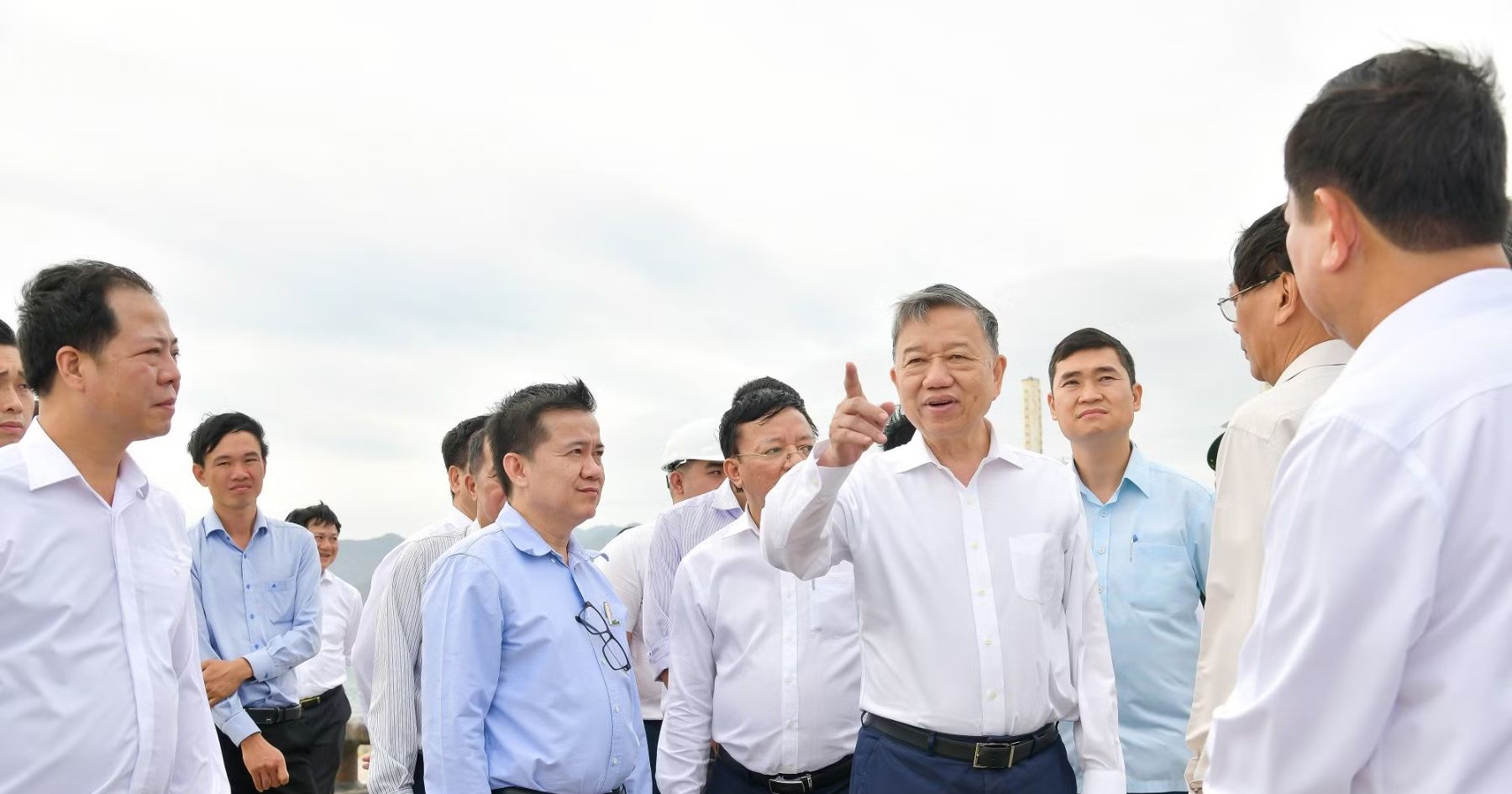
On December 5, 2025, General Secretary To Lam and the Central Working Delegation visited and conducted an on-site inspection of the Ca Na General Port.
To young entrepreneurs, I want to say: manage tightly and dare to go far, but know where you stand in the value chain. Learn the world's new technologies, but know how to organize and execute them with Vietnamese capability. And above all, work with dedication great enough that, looking back, you can be proud that your enterprise's success also contributed to the nation's success.
The era of national rise doesn't need more slogans. It needs people who dare to take on difficult work, dare to think, dare to act, dare to bear risk — and above all, who do real work, take real responsibility, and see things through to the end.
Reporter: Thank you very much for this fascinating conversation!
As the conversation drew to a close, Mr. Nguyen Tam Tien spoke not of vision or strategy, but emphasized a habit instead: working with full dedication so that, each night, he can sleep soundly with what he has accomplished that day. It is the philosophy of a man from the Central region who moved south to build his career, accustomed to hardship since his youth — and it is also the philosophy that has guided Trungnam Group through record achievements, through crises, and then through new records once again...
The Ca Na Complex — with its 1,500 MW power plant, a seaport capable of receiving half-a-million-ton vessels, and a green industrial park powered 100% by renewable energy — is taking shape day by day on the shores of Khanh Hoa, standing as an answer written in cement, steel, and will to the great question posed by Resolution 68: Is Vietnam's private economy capable enough to shoulder the major responsibilities once entrusted only to the state?
For Trungnam Group, the answer doesn't lie on paper. It lies in the first privately-owned 500kV transmission line, operating stably for six years; in the 1,600 MW of renewable power feeding into the grid every day; and in a historic LNG contract just signed — won not through preferential treatment, but through proven capability, tested and confirmed in international bidding.